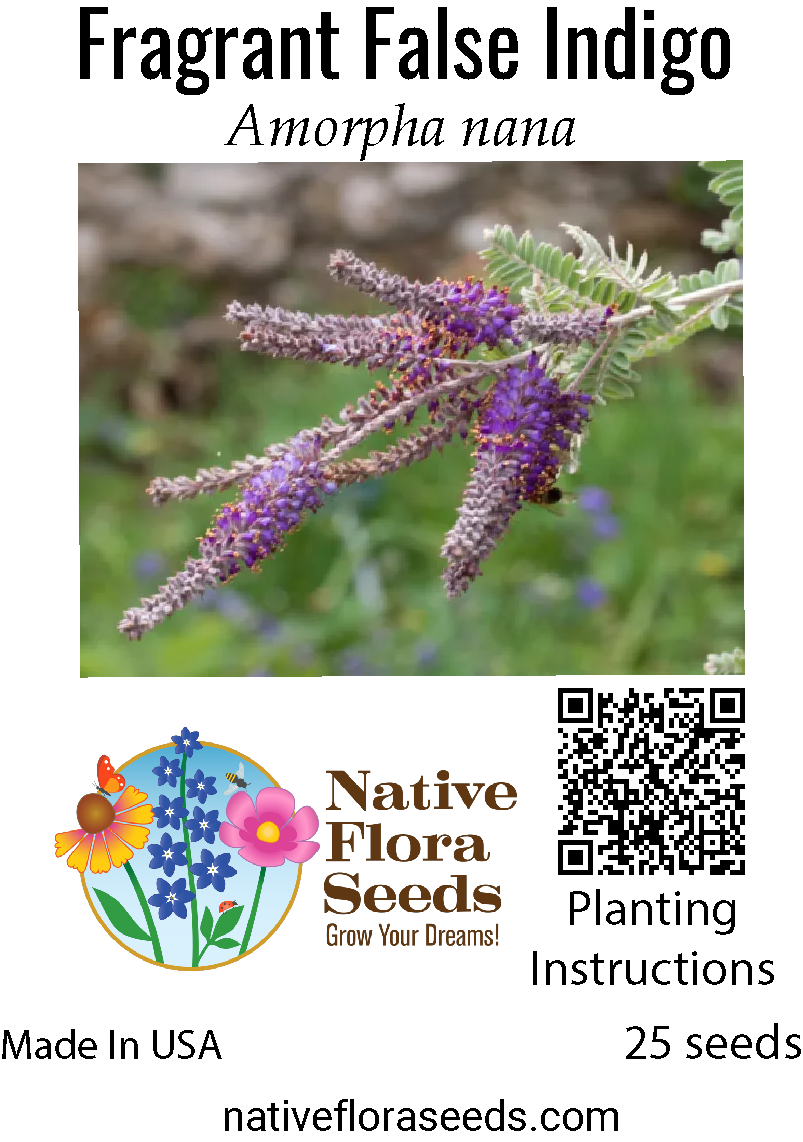
Fragrant False Indigo Seeds - Amorpha Nana Native Shrub

Regular price$4.00
/
Tax included.

  • Free delivery on orders over $50
  • In stock, ready to ship
  • Inventory on the way
Description

Discover the Beauty of Native Fragrant False Indigo

Transform your landscape with Fragrant False Indigo (Amorpha nana) seeds, a remarkable native shrub that brings both beauty and ecological value to your garden. This compact deciduous shrub is a true treasure for sustainable landscaping.

Why Choose Fragrant False Indigo?

  • Compact & Manageable: Grows only 1-3 feet tall, perfect for small spaces and borders
  • Drought Champion: Thrives in dry conditions with minimal water requirements
  • Pollinator Magnet: Purple-violet flowers with bright yellow stamens attract bees and butterflies
  • Soil Enricher: Nitrogen-fixing root nodules naturally improve soil health
  • Wildlife Haven: Provides food and shelter for native wildlife
  • Prairie Heritage: Authentic native plant from America's heartland

Plant Specifications

  • Height: 1-3 feet tall and wide
  • Bloom Time: Late spring to early summer
  • Flower Color: Purple-violet with yellow stamens
  • Hardiness: Zones 2-6
  • Habitat: Prairies, open woodlands, rocky slopes
  • Soil: Well-draining, tolerates poor soils

Perfect for native plant gardens, prairie restorations, xeriscaping, and creating sustainable wildlife habitats that connect you to America's natural heritage.

🌱 Site Selection


  • Location: Shady to partially shaded sites, such as woodland gardens, under trees, or north-facing slopes.

  • Soil: Prefers rich, loamy soil with high organic matter. A woodland-style soil enriched with compost or leaf mold is ideal.

  • Moisture: Needs consistently moist, well-drained soil; avoid dry or sandy spots.

🌿 Outdoor Direct Sowing


  1. Timing: Best sown in the fall so seeds experience natural cold stratification over winter.

  2. Soil Prep: Loosen soil and mix in compost or leaf mold.

  3. Depth: Sow seeds about ΒΌ inch deep, lightly covering with soil or leaf litter.

  4. Spacing: Space 18–24 inches apart to allow room for mature growth.

  5. Watering: Water well after planting and maintain steady moisture until seedlings establish.

  6. Stratification: If fall sown, nature provides the cold period. If spring sowing, seeds should be pre-stratified indoors (see below).

🏑 Indoor Seed Starting (for later transplanting)


  1. Cold Stratification: Seeds require at least 2–3 months of cold stratification.


    Place seeds in moist sand, peat, or paper towels inside a sealed bag.


    Refrigerate at 35–40Β°F (1–4Β°C) for 90 days.


  2. Sowing: After stratification, sow seeds in small pots or trays filled with humus-rich soil.

  3. Light & Temp: Keep in a cool, shaded location. Germination can be slow (sometimes taking a full year).

  4. Watering: Keep soil evenly moist, never allowing it to dry out.

  5. Transplanting: Transplant seedlings outdoors in late spring or early summer once the soil is workable and frost danger has passed.

🌼 Maintenance


  • Mulching: Apply a layer of shredded leaves or compost mulch to retain moisture and mimic forest floor conditions.

  • Watering: Keep soil moist, especially during dry periods.

  • Fertilizer: Generally unnecessary if soil is rich; add compost annually.

  • Caution: The berries and roots are toxic to humans; wear gloves when handling seeds or roots.

⚠️ Note on Patience: Red Baneberry seeds are naturally slow to germinate. It may take several months to a year before seedlings appear, and 2–3 years for plants to reach flowering size.

Fragrant False Indigo Seeds - Amorpha Nana Native Shrub - NativeFloraSeeds.org
Grow Level
Yes
Sprouts easily and is extremely hardy. Great for beginner gardeners of all levels!
US Heritage
Native Wildflower
A proud native US wildflower that bees and butterflies adore.
Winter Sleep (Cold Strat)
No Sleep Needed
Ready to sprout! Just plant in warm soil; no pre-chilling needed.
Best Planting Time
Early Spring or Fall
Sow in early spring for summer blooms, or in fall to let nature sow them.
Plant Nature
Perennial
Comes back year after year from the same deep roots!

Seasonal Sowing Advisor

Select the current season in your region to view clear instructions on optimal sowing and plant care activities.

Sprouting in the Springtime

Perfect time to sow! Plant these seeds in warm soil, keep the soil consistently moist but not waterlogged, and monitor for early sprouts.

  • Optimal Soil Temp: Sown seeds germinate best when soil temperatures reach 55 degrees F to 70 degrees F (13 degrees C to 21 degrees C).
  • Moisture Management: Keep the seedbed consistently moist but never soggy to prevent seed rot.
  • Sowing Tip: Mark your seedling rows or sowing areas with plant labels to monitor emergence and avoid accidental weeding.

Growing in the Summer Heat

Summer care: Water deeply in the morning so plants are hydrated before peak heat. Provide afternoon shade in extremely hot climates.

  • Watering Schedule: Water early in the morning to minimize evaporation and prevent fungal diseases.
  • Sun Exposure: Most native varieties thrive in full sun, but check species-specific requirements for heat stress.
  • Pollinator Benefit: Summer blooms act as critical nectar sources for bees, butterflies, and other essential pollinators.

Sowing in the Cool Autumn

Fall sowing: Scatter seeds directly onto clear soil before winter. The natural cold season will naturally stratify and prepare them for spring germination.

  • Direct Seeding: Scatter seeds directly over cleared soil. Press seeds firmly into the ground for optimal seed-to-soil contact.
  • Natural Moisture: Autumn rains and winter snow help settle seeds into the soil, initiating natural cold cycles.
  • Seed Harvesting: Collect mature seed heads from established plants to hand-sow in new areas or store for spring.

Dreaming in the Chilly Winter

Winter stratification: Outdoors, let the seeds undergo natural winter stratification under rain or snow. For early indoor starts, sow under grow lights.

  • Cold Stratification: Outdoor sowing relies on natural cold-moist winter cycles to break seed dormancy.
  • Indoor Starts: If starting early indoors, utilize seed trays under grow lights 6 to 8 weeks before the last frost date.
  • Sowing Tip: Protect outdoor winter-sown beds with light mulch or wire mesh to prevent disturbance by foraging birds or rodents.
Testimonials

β˜…β˜…β˜…β˜…β˜…

I love Native Sunflowers in my home garden and landscape.

Mary Hoggins
Tyler, Texas
β˜…β˜…β˜…β˜…β˜…

Last year in the Fall, I collected a lot of seeds I planted this year.

Roger Holmes
Dallas, Texas
β˜…β˜…β˜…β˜…β˜…

They really added a big splash of color to the front of my house garden bed. Love them!

Audrey Long
Mobile, Alabama

Recently viewed