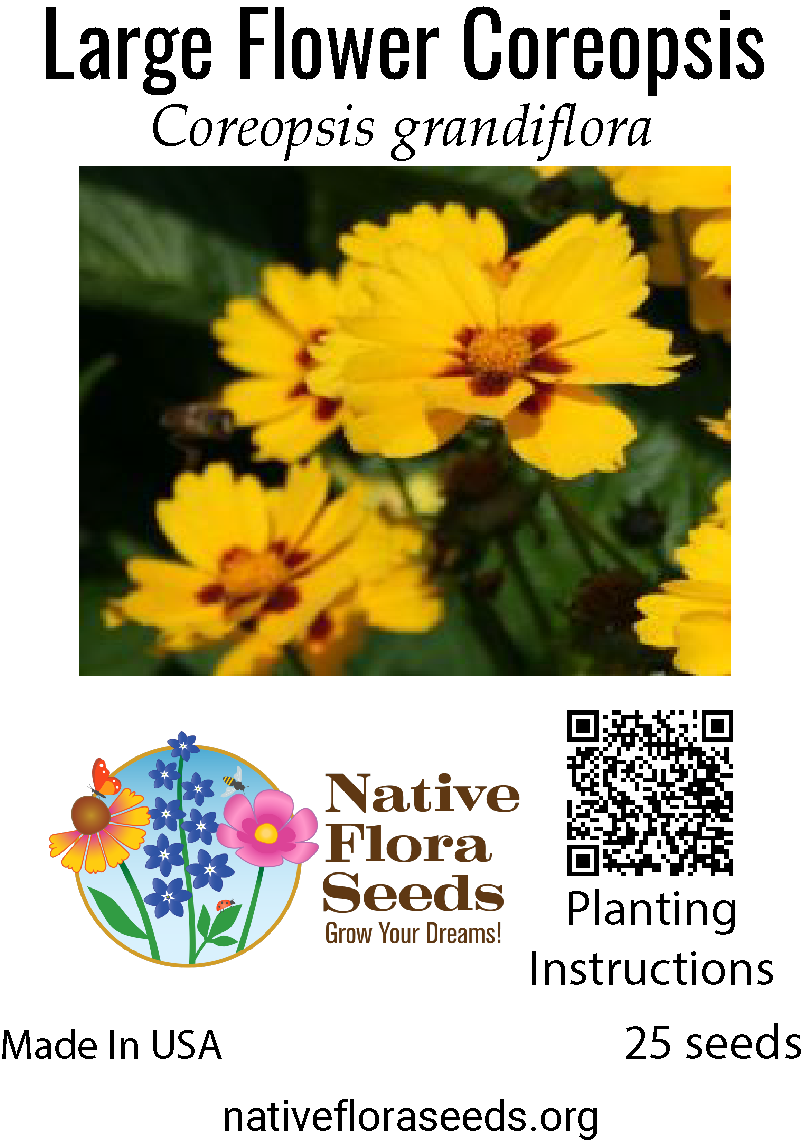
Large Flower Coreopsis Seeds - Premium Coreopsis grandiflora for Spectacular Blooms

Regular price$4.00
/
Tax included.

  • Free delivery on orders over $50
  • In stock, ready to ship
  • Inventory on the way
Description

Bold and Beautiful - Large Flower Coreopsis

Large Flower Coreopsis (Coreopsis grandiflora) is a showstopping native perennial that produces some of the largest, most vibrant golden-yellow blooms in the wildflower world. These impressive 2-3 inch flowers create stunning displays from early summer through fall, making this drought-tolerant beauty a must-have for any sunny garden.

🌻 Key Benefits:

  • Spectacular Blooms: Extra-large 2-3 inch golden-yellow flowers
  • Extended Season: Continuous blooms from early summer through fall
  • Drought Champion: Thrives with minimal water once established
  • Pollinator Paradise: Large flowers attract butterflies, bees, and beneficial insects
  • Cut Flower Star: Long-lasting blooms perfect for arrangements
  • Self-Seeding: Naturalizes easily for expanding displays

🌱 Plant Characteristics:

  • Height: 2-3 feet tall, 1-2 feet wide
  • Bloom Time: Early summer through fall
  • Flowers: Large golden-yellow daisy-like blooms, 2-3 inches across
  • Foliage: Deeply lobed, lance-shaped leaves
  • Light: Full sun (essential for best blooming)
  • Soil: Well-draining, adaptable to poor soils
  • Zones: 4-9

🎯 Perfect For:

  • Cottage and wildflower gardens
  • Xeriscaping and drought-tolerant landscapes
  • Pollinator habitat creation
  • Cut flower gardens (exceptional for bouquets)
  • Mass plantings for dramatic impact
  • Naturalized meadows and prairies

Growing Tips: Direct sow in fall or early spring. Seeds germinate easily in cool weather. Deadhead regularly to encourage continuous blooming and prevent excessive self-seeding.

Each packet contains fresh, viable seeds with detailed growing instructions. Sustainably sourced from native North American populations.

Here's a detailed planting guide for Coreopsis grandiflora (Large-flowered Tickseed) for direct sowing outdoors in fall or spring, and starting seeds indoors for transplanting, tailored for planting in the USA:

🌿 Coreopsis grandiflora Planting Instructions
Common Name: Large-flowered Tickseed
Plant Type: Perennial (short-lived, often reseeds itself)
Native Range: Southeastern and south-central United States
Pollinator Value: Excellent – attracts bees, butterflies, and other beneficial insects

β˜€οΈ Site Selection & Sunlight Requirements
Sunlight: Full sun (6–8+ hours/day) is ideal.
Tolerates light shade but best flowering occurs in full sun.
Soil: Adaptable to a range of soils including sandy, loamy, and rocky.
Drainage: Must be well-drained – avoid heavy, wet soils.
pH Range: Neutral to slightly alkaline preferred, but tolerant of most soil pH levels.
🌱 Soil Preparation
Loosen top 6–8 inches of soil before sowing.
Remove all weeds and debris.
Amend soil with light compost if it's very poor, but avoid rich soil – this can reduce flowering and promote floppy growth.
Avoid heavy fertilizers, as this can produce excess foliage with fewer flowers.

🌾 Direct Sowing Outdoors – Fall or Spring
Fall Sowing
When: After first frost but before the ground freezes (late fall).
Why: Allows natural cold stratification, improving spring germination.
How:
Broadcast seeds on soil surface.
Lightly press seeds into soil; do not bury deeply.
Cover lightly with 1/16 to 1/8 inch of soil or fine mulch.
Water lightly if dry. Natural moisture over winter will aid germination.
Spring Sowing
When: After last frost when soil is workable.
Stratification: Optional β€” 1–4 weeks of cold stratification can improve germination but is not strictly required.
How:
Prepare soil and sow seeds on surface or very lightly cover (1/16 to 1/8 inch).
Water consistently until germination, keeping soil moist but not waterlogged.
Germination typically occurs in 10–20 days.
🌱 Starting Seeds Indoors for Spring Transplanting
When to start indoors: 6–8 weeks before last frost date
Stratification: Not required but optional cold moist stratification for 1–4 weeks may enhance germination rates.
Scarification: Not needed
Sowing indoors:
Sow on top of moist seed-starting mix or barely press in.
Light is helpful for germination β€” do not cover deeply.
Maintain temperature at 65–75Β°F.
Use humidity dome or plastic cover until germination (10–20 days).
Transplanting outdoors: Harden off seedlings for a week, then transplant after frost risk is past.
πŸ’§ Watering
Keep soil evenly moist during germination and early growth.
Once established, very drought tolerant β€” water only during prolonged dry periods.
Avoid overwatering β€” this can cause root rot or weak stems.

βœ‚οΈ Maintenance Tips
Deadheading spent flowers promotes continuous bloom.
Cut back in fall or early spring to rejuvenate plant growth.
May require staking in richer soils or windy locations.
Plants may be short-lived but often self-seed under favorable conditions.
Divide clumps every 2–3 years if needed to maintain vigor.

❌ Is it Invasive?
Not invasive.
Can self-sow modestly, but is easy to control by removing unwanted seedlings.
A well-behaved addition to native gardens, pollinator gardens, and prairie plantings.

🌼 Other Notes
Excellent companion for other drought-tolerant wildflowers like:
Ratibida columnifera
Gaillardia pulchella
Monarda citriodora
Great choice for xeriscaping, meadow gardens, or low-maintenance borders.
Provides long-season blooms from early summer to frost with proper care.

Large Flower Coreopsis seed packet with yellow Coreopsis grandiflora blooms and planting info
Grow Level
Yes
Sprouts in a flash, loves hot sunny days, and lights up the garden with bright golden-yellow petals!
US Heritage
State Symbol (Florida)
A close cousin of Coreopsis, Florida's official state wildflower! A true pollinator champion.
Winter Sleep (Cold Strat)
No Sleep Needed
No stratification needed! These seeds are ready to leap into action and sprout quickly.
Best Planting Time
Spring or Fall
Sow directly outside in early spring or in the autumn to let the rain settle them.
Plant Nature
Perennial
Tough native perennial that establishes quickly and returns year after year.

Seasonal Sowing Advisor

Select the current season in your region to view clear instructions on optimal sowing and plant care activities.

Sprouting in the Springtime

Direct sowing: Broadcast seeds in a sunny location, press lightly into the soil, and maintain moisture with a gentle watering.

  • Optimal Soil Temp: Sown seeds germinate best when soil temperatures reach 55 degrees F to 70 degrees F (13 degrees C to 21 degrees C).
  • Moisture Management: Keep the seedbed consistently moist but never soggy to prevent seed rot.
  • Sowing Tip: Mark your seedling rows or sowing areas with plant labels to monitor emergence and avoid accidental weeding.

Growing in the Summer Heat

Continuous bloom: Prolific golden flowers will appear. Regularly remove spent blooms (deadhead) to stimulate continuous flowering.

  • Watering Schedule: Water early in the morning to minimize evaporation and prevent fungal diseases.
  • Sun Exposure: Most native varieties thrive in full sun, but check species-specific requirements for heat stress.
  • Pollinator Benefit: Summer blooms act as critical nectar sources for bees, butterflies, and other essential pollinators.

Sowing in the Cool Autumn

Seed maturation: Coreopsis seeds form dark, compact capsules. Harvest or scatter these seeds to promote self-sowing.

  • Direct Seeding: Scatter seeds directly over cleared soil. Press seeds firmly into the ground for optimal seed-to-soil contact.
  • Natural Moisture: Autumn rains and winter snow help settle seeds into the soil, initiating natural cold cycles.
  • Seed Harvesting: Collect mature seed heads from established plants to hand-sow in new areas or store for spring.

Dreaming in the Chilly Winter

Dormancy: Seeds and roots remain dormant during winter, prepared for rapid emergence in spring.

  • Cold Stratification: Outdoor sowing relies on natural cold-moist winter cycles to break seed dormancy.
  • Indoor Starts: If starting early indoors, utilize seed trays under grow lights 6 to 8 weeks before the last frost date.
  • Sowing Tip: Protect outdoor winter-sown beds with light mulch or wire mesh to prevent disturbance by foraging birds or rodents.
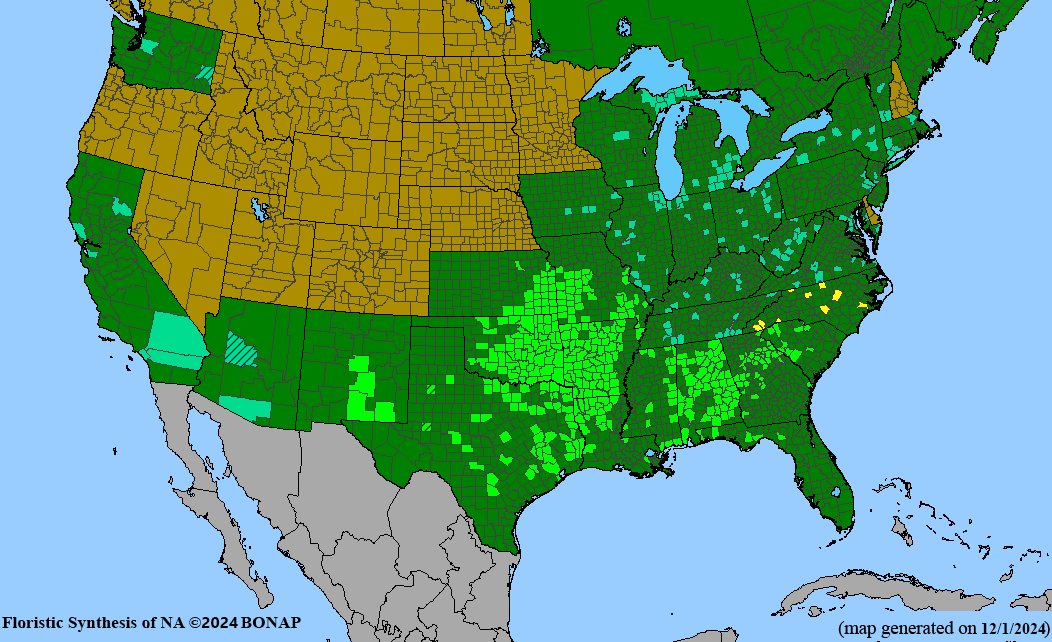
Coreopsis grandiflora
Large Flower Coreopsis

Native Plant Map

Dark Green indicates the plant is native within the state, yellow rare, the lime green indicates where the plant is native and seen more within a state.

Map Credits BONAPΒ©2024

Testimonials

β˜…β˜…β˜…β˜…β˜…

I love Native Sunflowers in my home garden and landscape.

Mary Hoggins
Tyler, Texas
β˜…β˜…β˜…β˜…β˜…

Last year in the Fall, I collected a lot of seeds I planted this year.

Roger Holmes
Dallas, Texas
β˜…β˜…β˜…β˜…β˜…

They really added a big splash of color to the front of my house garden bed. Love them!

Audrey Long
Mobile, Alabama

Recently viewed