

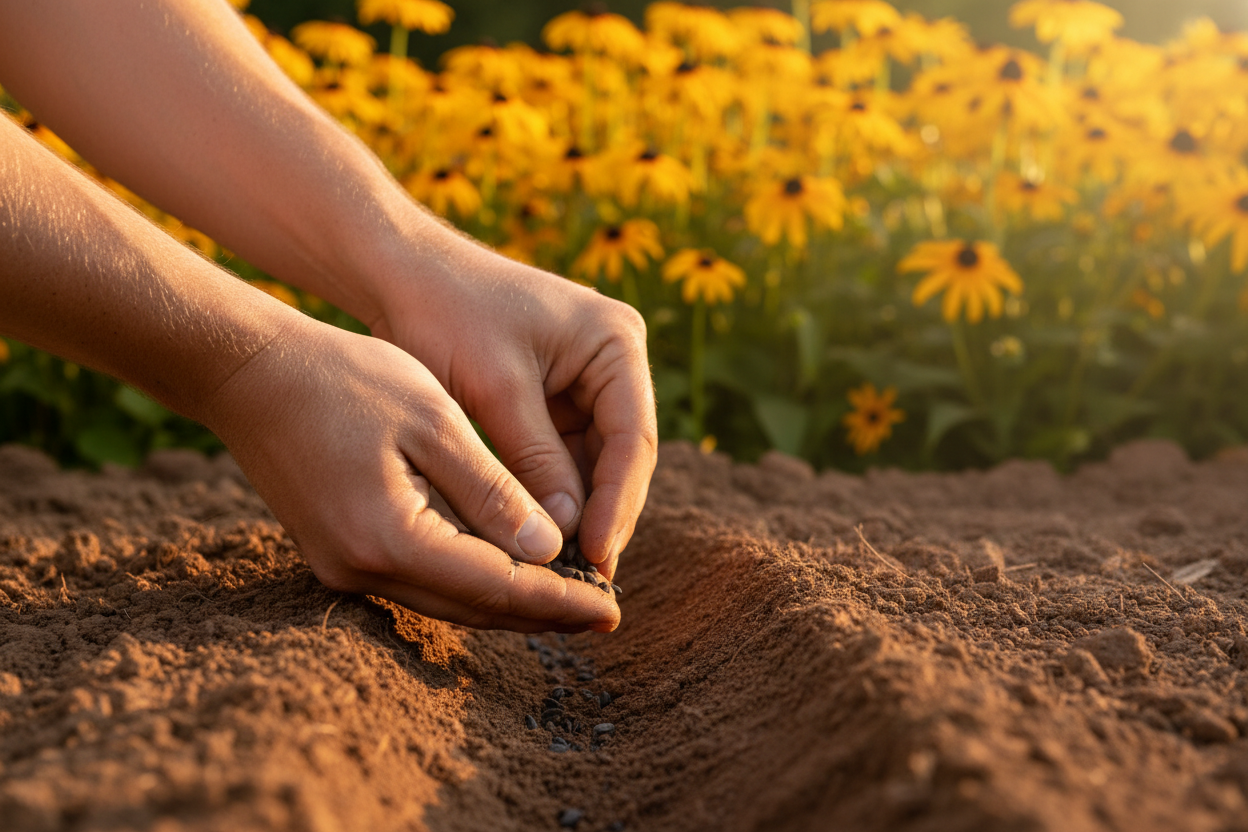
What to Plant in July: Native Seeds That Actually Thrive in Summer Heat
Think you missed the planting window? Think again. July is prime time for fast-blooming native annuals, heat-tolerant sowing, and setting up the most important planting season of the year: fall.
"Is it too late to plant?"
It's the number-one question we get all summer, and the answer surprises almost everyone: no. July isn't the end of planting season. For a whole category of native plants, it's the beginning of one, and it's also the single best month to prepare for fall, the most successful native-seed sowing window of the entire year.
Here's exactly what to do with your seeds this month.
1. Sow Fast-Blooming Native Annuals Now
Native annuals are built for speed: they sprout, bloom, and set seed in a single season, which means a July sowing can still deliver flowers before frost in much of the country.
- Partridge Pea (Chamaecrista fasciculata): cheerful yellow blooms, a favorite of bumble bees, and a nitrogen-fixer that actually improves your soil while it grows. USDA-NRCS plant guides note its rapid establishment, which is why it's a staple of pollinator plantings and restoration mixes.
- Plains Coreopsis (Coreopsis tinctoria): one of the fastest wildflowers in North America, often blooming in as little as 8–10 weeks from seed. Red-and-gold blooms until frost.
- Black-Eyed Susan (Rudbeckia hirta): behaves as an annual or short-lived perennial; July-sown plants establish now and explode with bloom next summer, with some flowering their first year in warm regions.
Keys to summer sowing success: sow into bare, weed-free soil; press seed firmly for soil contact; and water consistently (light, frequent watering until germination, then deep and less often). Summer heat speeds germination; moisture is the only limiting factor you control.
2. Let the Heat-Lovers Shine (and Take Notes)
July is also audit month. The natives blooming right now (wild bergamot, purple coneflower, butterfly milkweed, black-eyed Susan, blazing star) are your proof of what thrives in your conditions. Walk your garden this week and note the gaps: Where is nothing blooming? That's exactly where your next seed order goes.
3. Use July to Set Up Fall: The Real Main Event
Here's the insider truth of native gardening: fall is the best time to sow most native perennial seeds. The majority of native perennials need cold, moist stratification (a winter chill period that breaks seed dormancy), and fall sowing lets nature handle it for free, as university extension programs across the Midwest and Northeast consistently recommend.
That means July is when smart gardeners:
- Pick and prep the site: smother or clear vegetation now so it's planting-ready by September.
- Order seeds early: regional favorites sell out by the time fall sowing peaks.
- Plan the mix: aim for at least three species blooming in each season (spring, summer, fall) to feed pollinators continuously.
The Summer Bloom Bundle Sale Is On
If you caught yesterday's email, you already know: our Summer Bloom Bundles are available now in 20, 40, 80, and 120 packs: fast-blooming annuals for instant gratification, plus perennial mixes to stage for fall. Orders over $50 ship free, which makes the 80-pack the sweet spot for anyone converting real square footage.
Don't wait for "next season." In native gardening, the season is now.
👉 Shop Collection ·


